|
First Complete Mitochondrial Genome of Kerala’s Malabari Goat
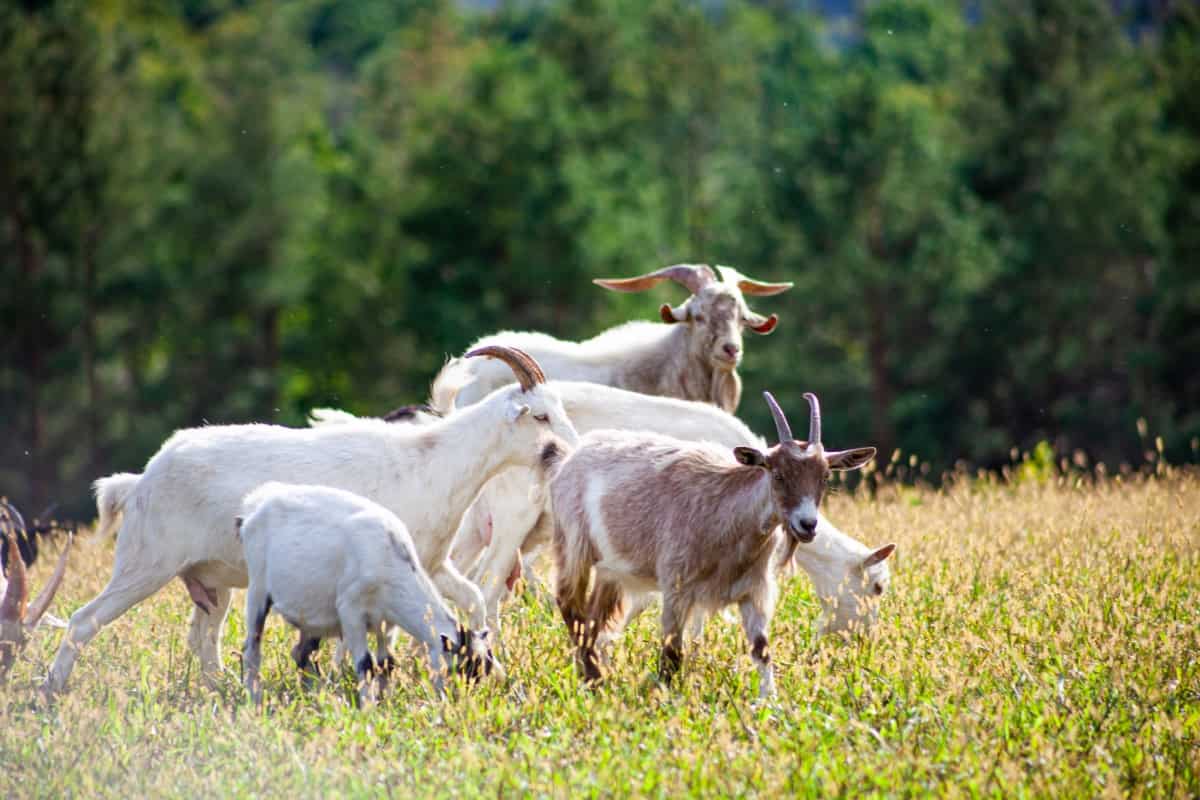
Researchers from Kerala Veterinary and Animal Sciences University (KVASU) publish the first complete mitochondrial genome of the Malabari goat in the journal Mammalian Genome. The publication reports the Malabari goat’s mitochondrial haplogroup placement, shared maternal genetic affinities with other goat populations, and a novel mitochondrial tRNA-related mutation.
Malabari Goat: First Complete Mitochondrial Genome (KVASU Study)
| Dimension | Key Details |
|---|---|
| Native habitat and distribution | Native to the Northern/South Malabari region of Kerala, and found across Kannur, Kozhikode, Wayanad, Palakkad, Thrissur, and Malappuram. |
| Body size and weight | Has a medium frame, adult females weigh about 30 kg, and males reach around 40 to 41 kg. |
| Coat colour | Shows highly variable coat colour, commonly pure white, black, brown, or mixed piebald patterns. |
| Horns and ears | In both sexes, horns are small and slightly twisted, pointing outward and upward, and ears are medium-sized and droop down. |
| Hair characteristics | Usually has a short coat, and some individuals carry longer hair or small beards. |
| Milk yield | Produces roughly 0.5 to 1.5 liters of milk per day under typical management. |
| Production traits | Is valued for milk and meat production, and shows high prolificacy with frequent twin and triplet births. |
| Climate resilience | Demonstrates exceptional evolutionary adaptation to hot and humid tropical coastal stressors. |
| Mitochondrial haplogroup placement | Belongs to mitochondrial haplogroup B1, a rare maternal lineage present in only about 3% of domestic goats globally. |
| India-wide haplogroup context | Most domestic goat breeds in India predominantly belong to haplogroup A. |
| Shared maternal genetic affinity | Shows strong maternal genetic affinity with Omani goats, Surti goats of Gujarat, and Iraqi Meriz goats. |
| Ultimate maternal ancestry | Traces ultimate maternal ancestry back to wild Bezoar goats (Capra aegagrus) of present-day Iran and Iraq. |
| Trade-route linkage reported | Confirms historical accounts that sea merchants transport live animals along the Indian Ocean Spice Route, resulting in genetic admixture between Arabian, Mesopotamian, Surti, and native feral caprine populations. |
| Novel genomic mutation reported | Identifies a novel heteroplasmic substitution in the MT-TL2 gene, and reports it as the first mitochondrial tRNA mutation in goats. |
| Bio-cultural evidence stated | Provides genetic proof of trans-oceanic trade networks extending beyond commodities to livestock exchange. |
| Conservation and breeding relevance stated | Mitogenome mapping provides for targeted selective breeding programs to preserve climatic resilience and disease-resistance traits without diluting rare genetic heritage. |