|
ASI Notifies Gollala Gudi Temple as Monument of National Importance
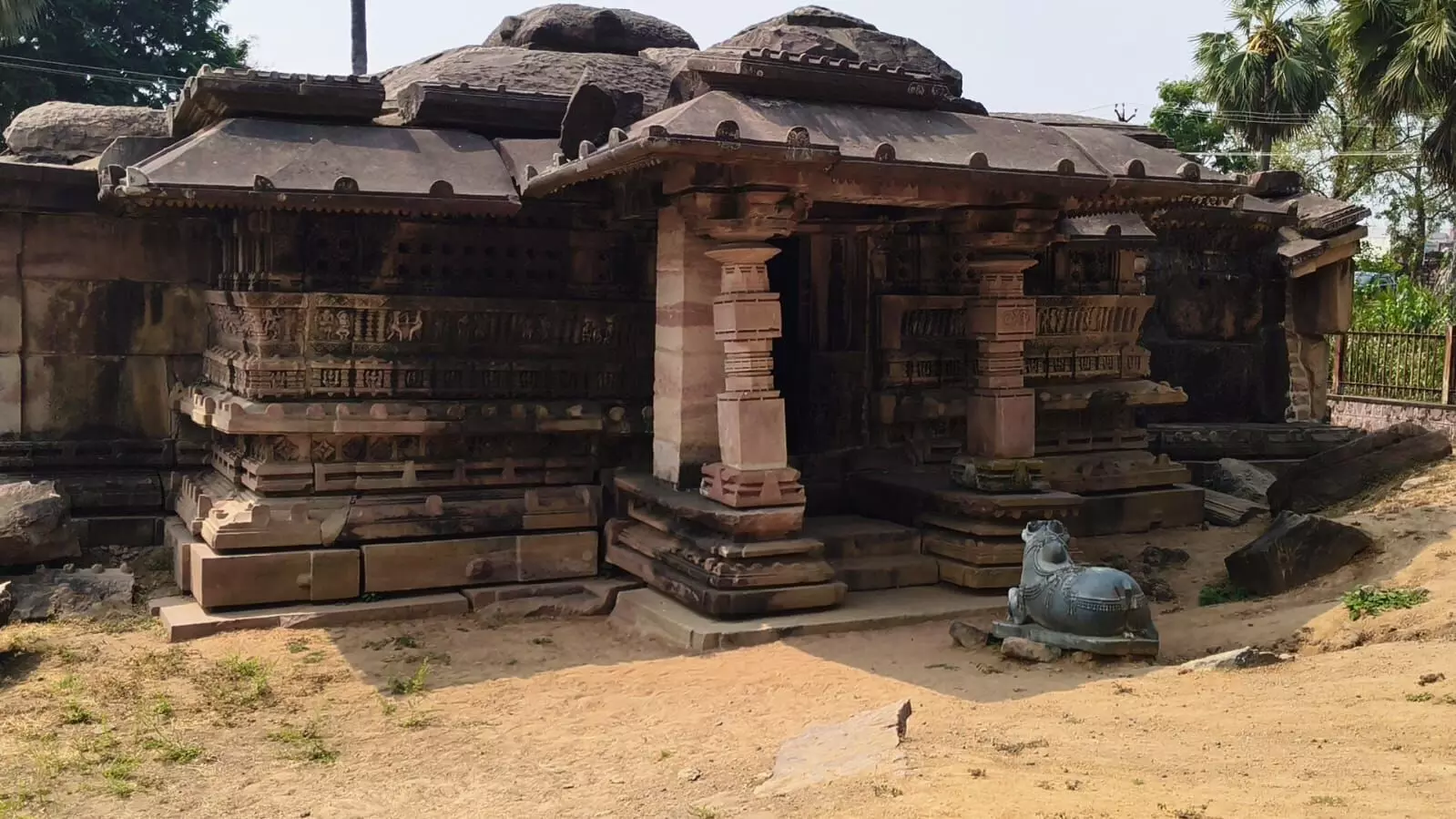
The Archaeological Survey of India notifies the Gollala Gudi Temple at Palampet in Mulugu district, Telangana, as a monument of national importance. The site is in the news due to this notification and its identification as a Kakatiya-era temple near the UNESCO-listed Ramappa Temple.
Gollala Gudi Temple:
| Dimension | Key Details |
|---|---|
| Dedication | The temple is dedicated to Lord Shiva. |
| Period | The temple is a Kakatiya-era temple built during the height of the Kakatiya dynasty. |
| Nearby UNESCO-listed site | The temple is located near the UNESCO-listed Ramappa Temple (Kakatiya Rudreshwara). |
| Construction technique | The temple is raised without binding mortar, using precisely interlocked dry masonry. |
| Temple type and layout | The temple is a Trikutalaya comprising a mandapa facing east and 3 garbhagrihas, with the central sanctum housing a Shiva lingam. |
| Architectural elements | The parapet is adorned with sculptures, and the entablature and doorways feature rows of carved hamsas with jali (latticework). |
| Associated shrines and guardians | Two detached shrines stand in front, intricately carved and adorned with figures of dvarapalas, with antechambers decorated by fine cornices and screens. |
| Interior plan | The main temple comprises a portico leading to a central hall with 3 shrines and antechambers to the north, south, and west. |
| Iconography on walls | The walls carry niches with images of Vishnu, Lakshmi, Ganesha, and Mahishasuramardini. |
| Mahishasuramardini | Mahishasuramardini is an epithet of the goddess Durga meaning “slayer of the demon Mahishasura.” |
| Kakatiya dynasty coverage | The Kakatiya dynasty is a Telugu dynasty that rules most of the eastern Deccan region between the 12th and 14th centuries, and its territory spans present-day Telangana and Andhra Pradesh, parts of eastern Karnataka, northern Tamil Nadu, and southern Odisha. |