Maths : Basic Numeracy

Q 57 / 370

UPSC CSE Prelims 2025

Consider the following statements:

  1. There exists a natural number which when increased by 50% can have its number of factors unchanged.
  2. There exists a natural number which when increased by 150% can have its number of factors unchanged.

Which of the statements given above is/are correct?

EXPLANATION

Correct Option (3)

Both I and II

Explanation

To determine the number of factors of a natural number, its prime factorization is utilized. If a natural number `n` is expressed as Explanation figure for the question: Consider the following statements: There exists a natural number which when increased by…, then the total number of factors of `n` is given by Explanation figure for the question: Consider the following statements: There exists a natural number which when increased by….


Statement I: There exists a natural number which when increased by 50% can have its number of factors unchanged.

  • Increasing a number `n` by Explanation figure for the question: Consider the following statements: There exists a natural number which when increased by… means multiplying it by 1.5, or Explanation figure for the question: Consider the following statements: There exists a natural number which when increased by…. The new number, `n'`, is Explanation figure for the question: Consider the following statements: There exists a natural number which when increased by….
  • For Explanation figure for the question: Consider the following statements: There exists a natural number which when increased by… to be a natural number, `n` must be even.
  • Let `n` be represented as Explanation figure for the question: Consider the following statements: There exists a natural number which when increased by…, where `K` is not divisible by 2 or 3.
  • Then, the new number `n'` is Explanation figure for the question: Consider the following statements: There exists a natural number which when increased by…. For `n'` to be a natural number, `a` must be at least 1.
  • The number of factors of `n` is Explanation figure for the question: Consider the following statements: There exists a natural number which when increased by….
  • The number of factors of `n'` is Explanation figure for the question: Consider the following statements: There exists a natural number which when increased by….
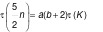
  • For the number of factors to remain unchanged, we set them equal: Explanation figure for the question: Consider the following statements: There exists a natural number which when increased by….

  • Solving this equation yields Explanation figure for the question: Consider the following statements: There exists a natural number which when increased by….
  • This condition implies that for a natural number `n` of the form `2^a * 3^b * K`, if `a = b+1`, its number of factors can remain unchanged. For example, consider `n=2`. Here, `a=1`, `b=0`, and `K=1`, satisfying `a = b+1`. The number of factors of `n=2` is 2 (1, 2). When increased by 50%, `n'` becomes `2 * 1.5 = 3`. The number of factors of `n'=3` is 2 (1, 3). Since the number of factors is unchanged, Statement I is correct.

Statement II: There exists a natural number which when increased by 150% can have its number of factors unchanged.

  • Increasing a number `n` by Explanation figure for the question: Consider the following statements: There exists a natural number which when increased by… means multiplying it by 2.5, or Explanation figure for the question: Consider the following statements: There exists a natural number which when increased by…. The new number, `n'`, is Explanation figure for the question: Consider the following statements: There exists a natural number which when increased by….
  • For Explanation figure for the question: Consider the following statements: There exists a natural number which when increased by… to be a natural number, `n` must be even.
  • Let `n` be represented as Explanation figure for the question: Consider the following statements: There exists a natural number which when increased by…, where `K` is not divisible by 2 or 5.
  • Then, the new number `n'` is Explanation figure for the question: Consider the following statements: There exists a natural number which when increased by…. For `n'` to be a natural number, `a` must be at least 1.
  • The number of factors of `n` is Explanation figure for the question: Consider the following statements: There exists a natural number which when increased by….
  • The number of factors of `n'` is Explanation figure for the question: Consider the following statements: There exists a natural number which when increased by….
  • For the number of factors to remain unchanged, we set them equal: Explanation figure for the question: Consider the following statements: There exists a natural number which when increased by….

  • Solving this equation also yields Explanation figure for the question: Consider the following statements: There exists a natural number which when increased by….
  • This condition implies that for a natural number `n` of the form `2^a * 5^b * K`, if `a = b+1`, its number of factors can remain unchanged. For example, consider `n=2`. Here, `a=1`, `b=0`, and `K=1`, satisfying `a = b+1`. The number of factors of `n=2` is 2 (1, 2). When increased by 150%, `n'` becomes `2 * 2.5 = 5`. The number of factors of `n'=5` is 2 (1, 5). Since the number of factors is unchanged, Statement II is correct.

Both statements are correct as demonstrated by the examples where the number of factors remains unchanged under the specified conditions.

Incorrect Options

Options (1), (2), and (4) are incorrect because both Statement I and Statement II are mathematically valid and can be demonstrated with examples where the number of factors remains unchanged.

Explanation figure for the question: Consider the following statements: There exists a natural number which when increased by… Explanation figure for the question: Consider the following statements: There exists a natural number which when increased by… Explanation figure for the question: Consider the following statements: There exists a natural number which when increased by… Explanation figure for the question: Consider the following statements: There exists a natural number which when increased by… Explanation figure for the question: Consider the following statements: There exists a natural number which when increased by… Explanation figure for the question: Consider the following statements: There exists a natural number which when increased by… Explanation figure for the question: Consider the following statements: There exists a natural number which when increased by… Explanation figure for the question: Consider the following statements: There exists a natural number which when increased by… Explanation figure for the question: Consider the following statements: There exists a natural number which when increased by… Explanation figure for the question: Consider the following statements: There exists a natural number which when increased by… Explanation figure for the question: Consider the following statements: There exists a natural number which when increased by… Explanation figure for the question: Consider the following statements: There exists a natural number which when increased by… Explanation figure for the question: Consider the following statements: There exists a natural number which when increased by… Explanation figure for the question: Consider the following statements: There exists a natural number which when increased by… Explanation figure for the question: Consider the following statements: There exists a natural number which when increased by… Explanation figure for the question: Consider the following statements: There exists a natural number which when increased by… Explanation figure for the question: Consider the following statements: There exists a natural number which when increased by… Explanation figure for the question: Consider the following statements: There exists a natural number which when increased by…