|
Supernova
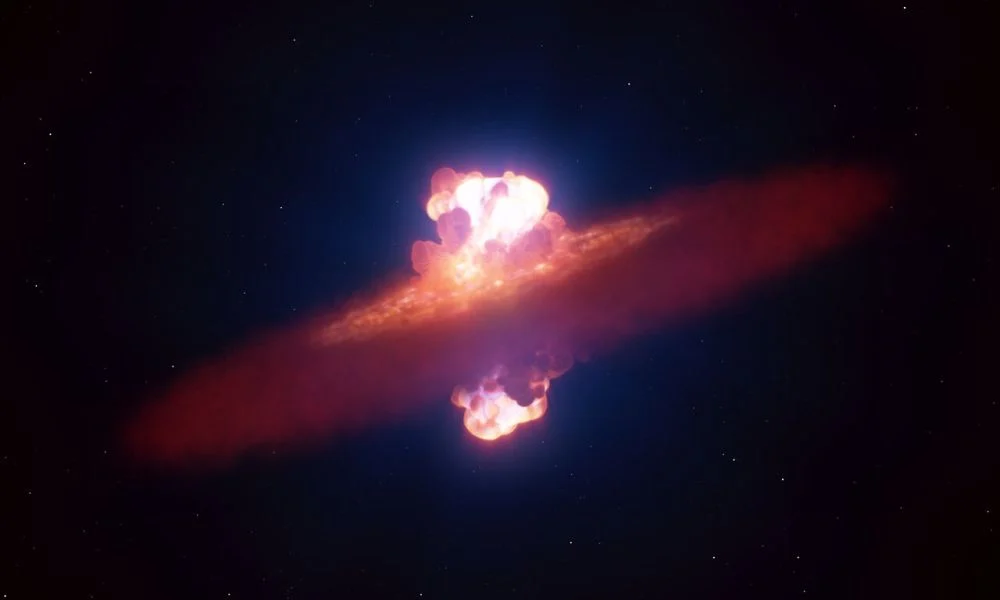
A study led by Indian researchers reports that observations of a supernova discovered in a galaxy about 90.7 million light-years from Earth could help astronomers improve measurements of distances in the nearby universe.
Supernova :
| Dimension | Key Details |
|---|---|
| Definition | A supernova is the name given to the cataclysmic explosion of a massive star. |
| Energy output | A supernova can emit more energy in a few seconds than the Sun radiates in its lifetime of billions of years. |
| Brightness and duration | Supernovae can outshine their entire galaxies for a few days or even months. |
| Role in element formation | Supernovae are the primary source of heavy elements in the universe. |
| Types mentioned | Types include core-collapse supernovae (CCSNe) and thermal runaway supernova. |
| Core-collapse supernovae (CCSNe): occurrence | CCSNe occur when a massive star exhausts its nuclear fuel and can no longer support itself against gravitational pull. |
| Core-collapse supernovae: most common type and conditions | The most common type of core-collapse supernova is Type IIP, which happens when a massive red supergiant star of about 8–17 times the mass of the Sun reaches the end of its life. |
| Core-collapse supernovae: process | When the star’s core collapses into a proto-neutron star, the outer material falls inward and then bounces back, creating a powerful shock wave; when the shock reaches the surface, the star’s outer layers break away and expand into space. |
| Thermal runaway supernova: conditions | It can occur when two stars orbit each other and one or both are white dwarfs; if the stars collide or if one white dwarf absorbs enough matter from the other star, the white dwarf can become a supernova. |