|
Jal Sanchay Jan Bhagidari Launched to Scale Community-Led Water Conservation
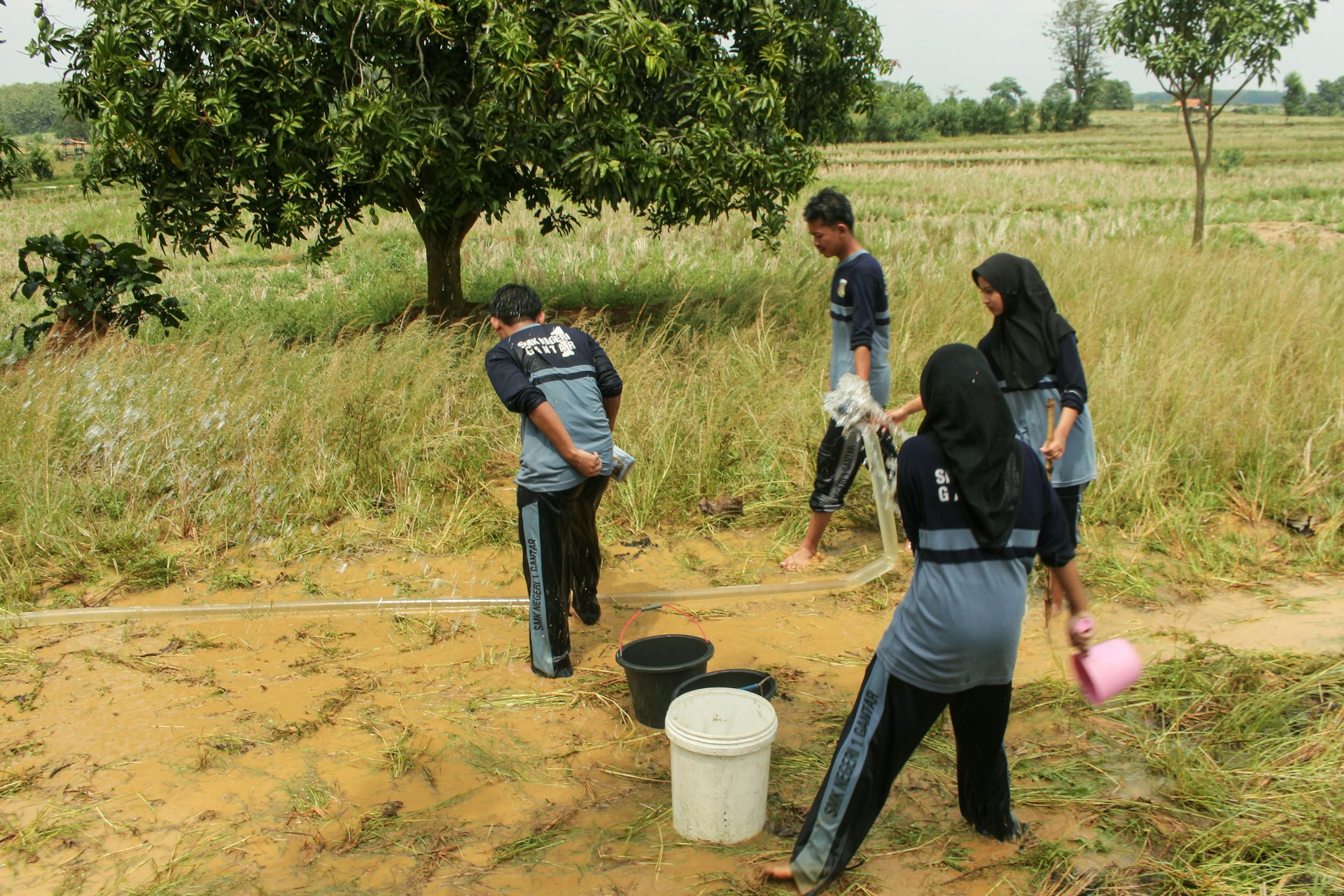
Jal Sanchay Jan Bhagidari (JSJB) is in focus as it is expanded and presented as “Jal Sanchay Jan Bhagidari: Catch the Rain (JSJB: CTR)” under the Ministry of Jal Shakti’s water conservation push. The Ministry of Jal Shakti holds a Departmental Summit in New Delhi on 1-2 September 2026, and JSJB: CTR is listed among the Summit’s key thematic pillars.
Jal Sanchay Jan Bhagidari:
| Dimension | Key Details |
|---|---|
| Establishment | Jal Sanchay Jan Bhagidari (JSJB) has been established on 6 September 2024. |
| Core focus | JSJB provides for constructing low-cost groundwater recharge and water storage structures, and reviving defunct borewells. |
| Approach | JSJB comprises scientifically designed, locally appropriate solutions through a Whole-of-Government and Whole-of-Society approach. |
| Guiding framework | JSJB comprises the 3Cs: Community, Corporate Social Responsibility (CSR), and Cost. |
| JSJB 1.0 progress | JSJB 1.0 comprises construction of more than 27 lakh structures across the country by May 2025 to capture rainwater and replenish groundwater. |
| JSJB 2.0 progress | JSJB 2.0 has been established in June 2025, and it comprises construction of more than 1.5 crore groundwater recharge structures by May 2026. |
| Expanded scope and campaign linkage | JSJB: Catch the Rain (JSJB: CTR) comprises JSJB and the Jal Shakti Abhiyan: Catch the Rain (JSA: CTR) campaign, and it applies to an expanded scope since June 2026. |
| Aggregate progress | As of 3 September 2026, more than 1.58 crore artificial groundwater recharge structures have been constructed. |
| Departmental Summit | The Ministry of Jal Shakti’s Departmental Summit has been held in New Delhi on 1–2 September 2026, and it comprises the first in a series of Departmental Summits. |
| Summit thematic pillars | The Summit comprises four key thematic pillars: Jal Sanchay Jan Bhagidari: Catch the Rain; water infrastructure projects; source sustainability of drinking water systems; and rural water supply under Jal Jeevan Mission 2.0. |
| Prime Minister’s suggestions at the Summit | The Summit discussions comprise suggestions by the Prime Minister: promoting “Jal Utsav”; strengthening knowledge and capacity on water management and governance in universities and higher educational institutions; structured inter-State study visits involving public representatives, officials, and farmers; and robust water data governance with water-sector data systematically managed, analysed, and utilised. |
| Chhattisgarh model (Korea district) | The Aawa Paani Jhoki movement comprises voluntary dedication of 5% of agricultural land for recharge ponds and terraced pits, and it comprises adoption by more than 1,260 farmers and creation of more than 2,000 soak pits across the district. |
| Chhattisgarh outcomes and support | The Korea district intervention comprises groundwater level rise of 3 to 4 metres in many villages and revival of springs in 17 remote tribal hamlets, and government support comprises micro-watershed mapping, hydrogeological assessments, and technical guidance. |
| Andhra Pradesh local mobilisation (Prakasam district) | JSJB implementation in villages including Murugummi, Marella, and Thangella comprises Gram Sabhas, door-to-door campaigns, Kalajathas, and workshops, and it comprises planning for water budgeting, crop planning, and groundwater sharing. |
| Ridge-to-valley approach | The ridge-to-valley approach comprises managing rainwater as it flows from higher ridge areas towards the valley, strengthening soil and water conservation downstream. |
| Andhra Pradesh structures and storage (Prakasam district) | Murugummi comprises 71 structures with about 8.11 lakh cubic metres storage and protective irrigation across 264.5 hectares; Marella comprises 53 structures with about 10.04 lakh cubic metres storage plus renovation of ponds and tanks adding nearly 5.95 lakh cubic metres; Thangella comprises 71 structures with around 5.89 lakh cubic metres storage plus revival of traditional water bodies adding approximately 3.98 lakh cubic metres. |
| Andhra Pradesh beneficiary coverage | The Prakasam district interventions comprise improved groundwater availability for about 5,900 people. |
| Odisha institutional convergence | In Odisha, JSJB comprises participation of schools, colleges, government offices, and other institutions for capturing rainwater where it falls and facilitating recharge into underground aquifers. |
| Odisha schemes (CHHATA and ARUA) | The CHHATA Scheme provides for capturing rainwater from rooftops, and the ARUA Scheme provides for recharge from water bodies into underground aquifers. |
| Odisha implementation (Jajpur district) | Between 2022-23 and 2025-26, Jajpur district implementation comprises 117 recharge shafts under the ARUA Scheme and 114 rooftop rainwater harvesting systems under the CHHATA Scheme, covering blocks including Korei, Binjharpur, Bari, Rasulpur, Dasarathpur, and Jajpur. |
| Odisha implementation (Cuttack district) | Cuttack district implementation comprises 57 rooftop rainwater harvesting systems under the CHHATA Scheme and 35 recharge shafts under ARUA in ponds and water bodies. |
| Odisha awareness support (Cuttack district) | Support activities comprise street plays, seminars, and workshops involving self-help groups, students, and Panchayati Raj Institutions. |
| Odisha trend and intervention site (Digapahandi, Ganjam district) | Digapahandi, Ganjam district comprises groundwater level fall of 1-3 metres between 2020 and 2022, and the intervention comprises rooftop harvesting systems in government offices and schools and recharge borewells. |
| Odisha assessment (Digapahandi) | Assessments comprise findings of better post-monsoon recovery around intervention sites. |