|
Dragonflies (Odonata) as Ecosystem Indicators
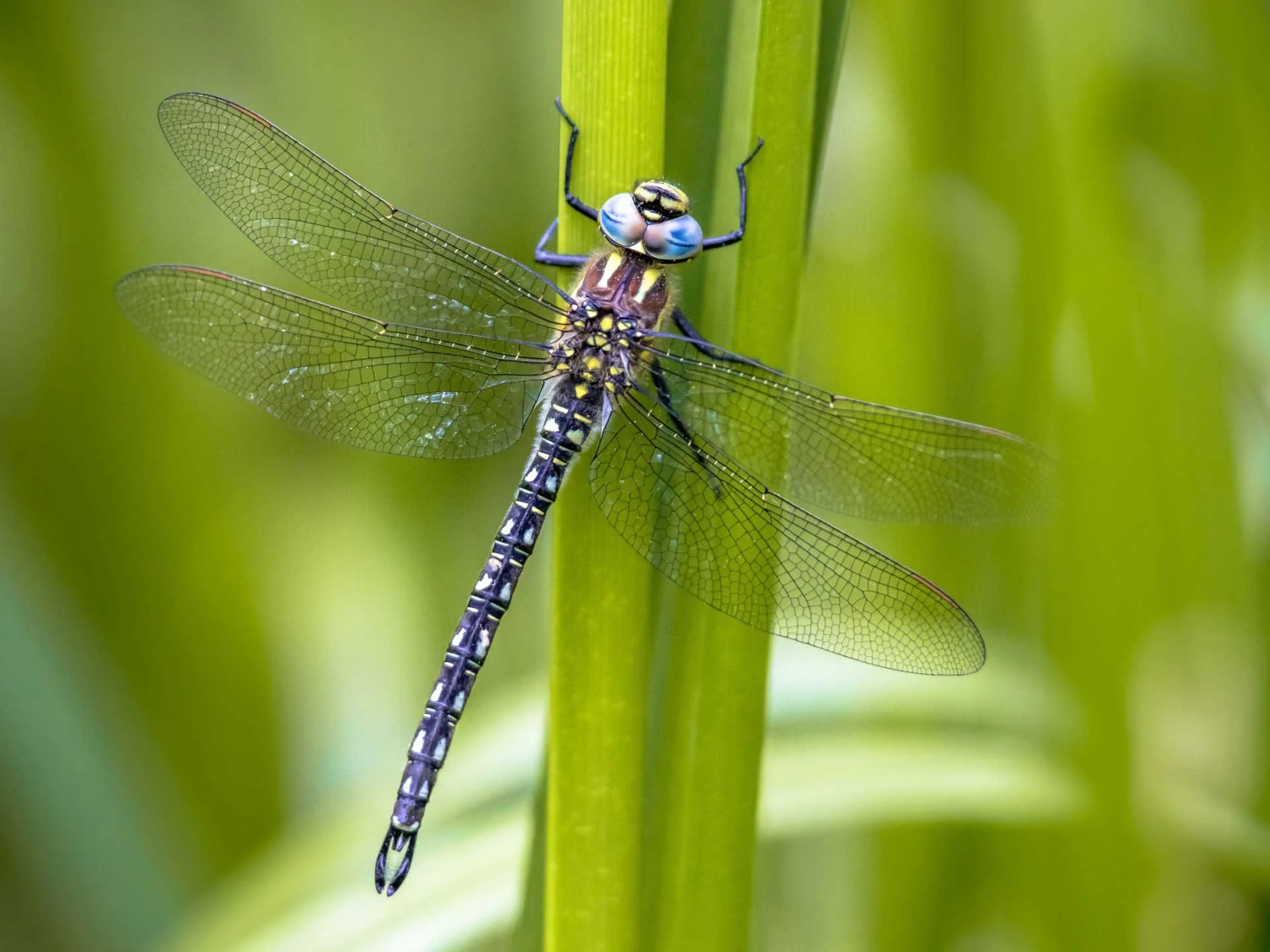
Recent studies on dragonflies (order Odonata) highlight their 360-degree ultraviolet-sensitive vision and highly sensitive visual system. Recent ecological surveys indicate declining dragonfly populations and the disappearance of certain species, including a Western Ghats endemic that is now rarely observed.
Key Facts of Dragonflies:
| Dimension | Key Details |
|---|---|
| Taxonomy | Comprises the order Odonata, which includes both dragonflies and damselflies. |
| Species in India | Comprises approximately 600 species in India. |
| Distribution in India | Comprises significant species diversity in the Northeast and Western Ghats regions. |
| Example species | Comprises the Blue Hawklet (Hylaeothemis apicalis), which is endemic to the Western Ghats and is now rarely observed. |
| Evolutionary background | Comprises insects among the earliest known flying organisms, originating approximately 300 million years ago. |
| Life stage and habitat | Comprises aquatic nymphs inhabiting wetlands, ponds, and streams. |
| Adult characteristics | Comprises adults functioning as aerial predators and possessing four independently moving wings. |
| Feeding and pest regulation | Comprises nymphs consuming mosquito larvae and crop pests, particularly in paddy fields; and adults preying on leafhoppers and other harmful insects. |
| Ecosystem indicator role | Comprises indicators of healthy ecosystems and sustainable agricultural practices, with presence reflecting overall ecological condition. |
| Threats | Comprises population decline associated with pesticide use, particularly systemic compounds such as fipronil; negative impacts from increased droughts and unpredictable rainfall patterns; and predation by various other organisms. |
| Vision and opsin genes | Comprises panoramic vision (360 degree) facilitated by more than 16 opsin genes, in contrast to 4 found in humans, and comprises ultraviolet light detection. |
| Research status | Comprises ongoing research continuing to uncover additional biological insights regarding this species. |